Budapest as Moscow’s Puppet. Elections in Hungary and Ukraine’s Interests
Parliamentary elections in Hungary are scheduled for April 12, 2026. Based on the results, there is a high probability that a change in the country’s leadership will occur;
in that case, Hungary’s policy is expected to be pro-European and pro-Ukrainian. And the country’s current leadership, headed by V. Orbán, will be held accountable;
therefore, a fierce struggle for power is currently underway in Hungary, during which Russia is siding with V. Orbán, supporting him financially and through propaganda;
a central focus of V. Orbán’s election campaign is criticism of the EU for providing aid to Ukraine. At the same time, our country is being “demonized”, and joint Hungarian-Russian provocations are being carried out against it.
To date, Europe is the Kremlin’s greatest target of hatred after Ukraine. It openly calls Europe Russia’s main adversary, including in the military sphere. After all, Europe is preventing it from seizing Ukraine and, consequently, from realizing its aspirations to become a “great world power” on par with the United States. This is extremely frustrating for the Kremlin under the current circumstances, when it seems to have an opportunity to share the world with the White House. Even though Donald Trump has no intention of doing so, Putin still hopes for his support, refusing to abandon his ambitions. He seeks to remove Europe from his path as the main obstacle. Although the Kremlin’s plans regarding Europe are broader in nature. It seeks to subjugate Europe and reclaim at least what was once within the Soviet Union’s sphere of influence. This includes Central and Eastern Europe (CEE) and Southeastern Europe (SEE), as well as the Baltic states, which Russia stubbornly considers its “lost territory”.
The Kremlin’s main strategies for implementing these intentions include military blackmail of Europe, undermining the internal unity of NATO and the EU, and destabilizing the situation in European countries. To this end, various tools of “hybrid warfare” are employed, including the establishment of a Russian lobby in Europe to advance Russian interests. Currently, it includes leaders of certain European countries, politicians and parties with Eurosceptic, far-left, openly right-wing, and pro-Russian leanings, as well as representatives of large and medium-sized businesses interested in accessing Russian natural resources and markets, as well as a segment of the Russian diaspora that retains chauvinistic sentiments.
To win them over, the Kremlin employs its traditional methods: bribing political elites, granting business preferences – including through corrupt schemes – funding political parties, and establishing various organizations that recruit former Russian citizens. Russian intelligence services are involved in this, using their network of agents in Europe, which has existed there since Soviet times. They are also actively recruiting new agents.
As part of these efforts, the Kremlin pays special attention to countries in Central, Eastern, and Southeastern Europe that are susceptible to Russian influence. Indeed, some of their politicians, who were recruited by the Soviet KGB, now work for Russia’s FSB. Economic ties established during the Soviet era, including in the energy sector, also remain in place. This facilitates mutual market access between Russia and the countries of Central and Eastern Europe (CEE) and Southern Europe (SEE), which is important to them because they find it difficult to compete in the European market.
Besides, citizens of those countries are more susceptible to Russian propaganda, a phenomenon linked to their shared past with the Soviet Union and their historical and current disputes with Ukraine. And, ultimately, they are poorer than Western Europe and therefore more susceptible to populist ideas. This strengthens the positions of left- and right-wing political forces supported by Russia, which cooperate with it.
Unfortunately, the Kremlin’s activities regarding CEE and SEE countries are effective, creating problems for Europe and, even more so, for Ukraine. Among these are complications for NATO and the EU in adopting and implementing decisions regarding collective counteraction against Russia and support for Ukraine.
Since the early 2010s, Prime Minister of Hungary Viktor Orbán has been the main champion of Russia’s interests and its main ally in Europe. Many media outlets have reported on his past ties to both the Soviet KGB and the Russian crime boss Sergei Mogilevich. The Kremlin continues to support him politically and economically, while also actively working on his behalf in Hungary’s media landscape. In particular, it grants Hungary trade privileges with Russia, supplies oil and gas at reduced prices, and provides loans. For instance, Hungary received EUR 10 billion from Russia for the construction of the second Paks nuclear power plant.
This also serves as the basis for corruption schemes between Hungarian businesses close to Orbán and his Russian partners. In particular, according to journalistic investigations, the Hungarian oil company MOL Group buys oil from the Russian companies Rosneft and Lukoil at low prices, but sells it in Hungary and Slovakia at significantly higher prices. While the documents list one set of prices, the actual prices are entirely different. The difference is pocketed. The same applies to the volumes of oil supplied.
Viktor Orbán’s business partners in Hungary are considered to be the billionaire oligarchs László Szíjj and László Mészáros. They are given priority in the execution of government contracts through winning the relevant tenders.
In exchange for this support, Viktor Orbán backs the Kremlin in its efforts to achieve its goals regarding Europe and Ukraine. Indeed, even before the start of Russia’s full-scale war against Ukraine, he obstructed our country’s European and Euro-Atlantic integration. For example, he blocked decisions by NATO and EU leadership to hold negotiations with Ukraine over its alleged violation of the rights of ethnic Hungarians.
One of the most high-profile manifestations of Viktor Orbán’s activities was a massive campaign accusing Ukraine of discriminating against Hungarians. It was organized after our country adopted the Language Law (Law of Ukraine “On Ensuring the Functioning of the Ukrainian Language as the State Language”). The Hungarian authorities claimed that Ukraine had thereby deprived Hungarian youth of the right to study in their native language.
At the same time, Budapest is stoking separatism in the Ukrainian territories bordering Hungary. This takes the form of support for activists from the Hungarian diaspora and their organizations, who advocate for granting the Transcarpathian region autonomy and even its annexation to Hungary. Such activities by the Hungarian side intensified particularly in the spring of 2014, coinciding with Moscow’s hybrid operation “Russian Spring”, through which the Russians sought to disintegrate Ukraine. In other words, V. Orbán worked side by side with Putin.
With the outbreak of Russia’s full-scale war against Ukraine, Viktor Orbán’s efforts to support the Kremlin’s interests took on new forms. Specifically, he focused on undermining NATO and EU efforts to contain the Russian Federation and on opposing European assistance to Ukraine in its military confrontation with the aggressor. V. Orbán justifies his position by arguing that it is counterproductive to tighten sanctions against Russia and take measures to support Ukraine, as this is supposedly ineffective, merely prolongs the war, and exacerbates European-Russian relations.
He also tries to convince Europeans of the “excessiveness” of Brussels’ spending on Ukraine and on strengthening European security. Because, he believes, this is draining the EU’s financial capacity. According to him, the European Union is forced to cut funding for programs aimed at developing the European economy, providing social security for the population, and addressing other pressing issues.
Viktor Orbán’s stance has hardened regarding blocking Ukraine’s potential accession to the EU and NATO. According to him, Hungary will never allow Ukraine to join these organizations, as this could lead to Europe’s economic collapse and drag it into a war with Russia.
Ukraine’s accession to NATO is not currently on the table. Therefore, Budapest’s actions do not particularly hinder us. The real problem for Ukraine is the blocking of its negotiations with the EU regarding its accession to the European Union.
Besides, Budapest has blocked the EU’s decision to allocate $90 billion in financial aid to Ukraine. Earlier, Hungary was among the countries which prevented the use of approximately $210 billion in funds from the Central Bank of Russia – which had already been frozen by the European Union – for Ukraine’s benefit.
Hungary is also obstructing the European Union’s adoption of the 20th package of sanctions against Russia.
According to EU leadership, it will continue to provide financial support to Ukraine and will not yield to Hungary’s resistance. A search for legal solutions to this problem is currently underway.
In this context, the parliamentary elections in Hungary on April 12 of this year will be of fundamental importance, as they could put an end to Viktor Orbán’s rule. And then Budapest’s policy will undergo changes. At present, there is every reason to believe this will happen.
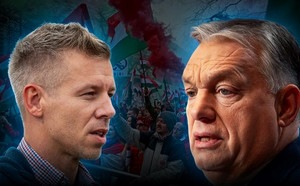
The current Hungarian government is losing its authority and is already ceding ground to the opposition, represented by the Tisza Party led by P. Magyar. This is quite evident and stems from the fact that Hungarians are increasingly voicing their dissatisfaction with the decline in their standard of living, the corruption of V. Orbán’s regime, and his pursuit of openly anti-Ukrainian and pro-Russian policies. And then V. Orbán may not only lose his power and wealth but also face criminal prosecution by the new government, which will certainly accuse him of involvement in corruption. The leader of the Tisza Party, P. Magyar, has already promised to launch an investigation into the current government’s activities and is building his election campaign on this. V. Orbán is also highly likely to be blamed for his political course, as the current Hungarian opposition holds pro-Western positions.
This explains V. Orbán and his allies’ struggle for power. They are doing their best to win the election. Their campaign is built on the ever-relevant themes of the government’s commitment to the safety and well-being of citizens. At the same time, Orbán attributes the country’s economic problems – which actually stem from his government’s corruption – to the negative consequences of the EU’s policies toward Hungary, as well as the impact of the Russia-Ukraine war. For instance, he accuses EU leaders of imposing “economic diktats” on Hungary, restricting its access to European funds, and imposing sanctions for defending its interests. In reality, the EU merely demands from Hungary to comply with European norms and regulations.
Besides, V. Orbán claims that the European Union leadership harbors “pro-war” sentiments, which contribute to the continuation of the war in Ukraine. This is precisely how he views the EU’s aid to our country. According to him, all of this increases Hungary’s losses from the war, which, as of 2022, have already reached nearly EUR 30 billion.
However, V. Orbán is still wary of criticizing the EU, as Hungary depends on its subsidies. With this in mind, he focuses on insinuations regarding Ukraine, which he claims is itself to blame for the war and has no desire for peace at all. He “demonizes” Ukraine, portraying it as the primary source of problems and threats to Hungary. Using Ukraine as an example, he attempts to demonstrate the consequences of confrontation with Russia. In this way, he justifies his pro-Russian policy, which he claims is beneficial to Hungary and even prevents Hungary from suffering the same fate as Ukraine.
Another propaganda narrative used by the Hungarian government is to convince the country’s population that there is a collusion between the EU and Ukraine aimed at forcing Hungary to stop purchasing oil and gas from Russia. The emphasis is placed on the fact that Budapest’s compliance with such demands will lead to higher petrol and gas prices in Hungary, increased utility bills, and rising inflation. In this way, Viktor Orbán not only turns Hungarians against the EU and Ukraine but also safeguards the interests of his corrupt business empire.
Russia is once again providing support to Viktor Orbán. And it has a strong interest in him. The Kremlin is participating in the financing of his election campaign and has even sent a group of political strategists to Budapest. According to a number of reports, the coordinator of the operation to support Viktor Orbán is Sergei Kirienko, First Deputy Chief of Staff of the Russian President. He already has experience in such activities, gained in relation to other countries. It is precisely the activities of this group that can be linked to the provocations against Ukraine that Hungary has recently intensified. It is clear that, with the specific aim of creating yet another pretext for V. Orbán against Ukraine and to block financial aid allocated to it by the European Union, Russia struck a pumping station on the Druzhba oil pipeline near the Ukrainian city of Brody, as a result of which Hungary lost access to its sole source of oil. Now V. Orbán is accusing Ukraine of refusing to repair it. According to his statement, he will block the EU’s financial aid to Ukraine until it restores the flow of oil to Hungary. In other words, Russia is willing to incur losses from halting oil exports to Hungary in order to prevent Ukraine from receiving EU funds and to assist Viktor Orbán in his election campaign. Viktor Orbán himself is sacrificing his country’s well-being for this cause.
Another provocation by Budapest was the detention by Hungarian authorities of Ukrainian cash couriers who were transporting cash from Austria to Ukraine via Hungary. Despite the fact that the financial transaction was entirely lawful, Budapest accused Ukraine of embezzling financial aid from the European Union. Viktor Orbán is now trying to use this as yet another argument in favor of his demands to halt support for Ukraine.
However, none of this is really helping Viktor Orbán and his Fidesz party. Even participants in the elections they themselves organized are demonstrating a negative attitude to them. The European Union is also putting pressure on Viktor Orbán. Back in 2022, the EU blocked the process of allocating EUR 27 billion in financial aid to Hungary. The reason: violations of the rule of law, corruption, and restrictions on human rights in Hungary.
At the end of March this year, a loan plan was frozen that would have allocated EUR 16 billion to Hungary under the SAFE program (under the program, funds from a special EU fund are provided to European countries for the purchase of weapons and the development of their defense-industrial complexes). Officially, the loan plan is supposedly being revised. However, EU officials attribute the freeze to Viktor Orbán’s blocking of financial aid to Ukraine. Furthermore, EU and NATO leaderships have barred Hungary from receiving classified information because it is passing it on to Russia.
Opposition to Viktor Orbán is also emerging in the USA. Two American Senators from the Republican and Democratic parties have drafted a resolution to impose sanctions on him for pursuing pro-Russian and anti-Ukrainian policies.
It should also be noted that Viktor Orbán has allies. In addition to Putin, US President Donald Trump is on his side, using Orbán as a tool to weaken Europe, which is beginning to compete with America. Another ally of Viktor Orbán is Prime Minister of Slovakia Robert Fico. According to him, if Orbán loses power, he will continue Orbán’s efforts to block European aid to Ukraine. According to some reports, Orbán is supported by German businesses interested in resuming cooperation with Russia. However, all of this is unlikely to help Orbán retain state power.
Thus, the Kremlin continues to attempt to use the countries of Central, Eastern, and Southeastern Europe to weaken NATO and the EU, as well as to undermine their internal unity in the effort to contain Russia and support Ukraine. Such actions by the Russian leadership have consequences. First and foremost, this applies to Hungary, which has already become the main conduit for Russian interests in Europe. The reason is Hungarian Prime Minister Viktor Orbán’s close ties with Russia, both through its intelligence services and through joint corrupt activities.
Currently, V. Orbán has managed to temporarily block European Union financial aid to Ukraine, the 20th package of EU sanctions against Russia, as well as negotiations on our country’s accession to the European Union. At the same time, EU leadership hopes that all these issues will be resolved both through the legal institutions of the European Union and as a result of a change in power in Hungary following the election results.
The elections in Hungary will be decisive for the country. If the current opposition wins, Budapest will shift its course from pro-Russian and anti-Ukrainian to pro-Western and pro-Ukrainian. This will have positive consequences for Europe, Ukraine, and Hungary itself.
As the parliamentary elections in Hungary draw near, the struggle for power is intensifying. Meanwhile, Russia stands by Viktor Orbán’s side. A central focus of his campaign is criticism of the EU for providing aid to Ukraine and the display of a sharply negative attitude to our country, accompanied by Hungarian-Russian provocations.
Yurii Ilchenko,
Institute for Global Politics